

Table of Contents
- Why Professional Saddle Fitting Assessments Matter
- Signs of an Ill-Fitting Saddle You Shouldn't Ignore
- Static vs. Dynamic Assessment: Understanding the Difference
- How Much Does a Saddle Fitter Charge?
- What Happens During a Professional Evaluation
- Saddle Fit and Long-Term Soundness
- DIY Maintenance Between Professional Visits
- Saddle Fit for Different Disciplines
- Frequently Asked Questions
Last Updated: September 20, 2026
Why Professional Saddle Fitting Assessments Matter
A poorly fitting saddle can cause chronic pain, restricted movement, and behavioral problems that persist long after you dismount. Professional saddle fitting assessments identify these issues before they become injuries. Proper saddle fit isn't a luxury, it's foundational to equine welfare and performance.
The relationship between saddle fit and long-term soundness runs deeper than most riders realize. When a saddle distributes weight unevenly, it creates pressure points that compress muscle tissue, restrict blood flow, and eventually cause lameness. A qualified fitter uses both static and dynamic assessment methods to catch these problems early, preventing months of rehabilitation and lost training time.
Many riders assume their saddle fits because their horse "seems fine." That assumption costs them. Horses adapt to discomfort by changing their movement patterns, which then leads to compensatory injuries in other joints. By the time lameness becomes obvious, the damage is often significant. Professional assessment catches the problem when intervention is still simple.
Signs of an Ill-Fitting Saddle You Shouldn't Ignore
An ill-fitting saddle leaves clear evidence if you know where to look. Bridging, where the saddle makes contact only at the front and back, leaving a gap in the middle, is one of the most common problems. This concentrates pressure on two small areas instead of distributing it across the horse's back, causing muscle soreness and reduced performance.
Excessive sweating under the saddle pad, even in cool weather, signals pressure concentration and poor air circulation. Behavioral resistance during mounting, bucking under saddle, or sudden refusals often trace back to saddle discomfort rather than training issues. A horse that was willing suddenly becomes difficult when an ill-fitting saddle is placed on its back.

White hairs appearing on the horse's back indicate chronic pressure damage. These aren't cosmetic, they mark areas where the saddle has repeatedly compressed hair follicles, killing pigmentation. Once white hairs appear, the damage is done, though they eventually grow out if the pressure is relieved.
Look also for uneven muscle development. A saddle that shifts forward restricts scapular clearance and prevents the front legs from moving freely, which leads to underdeveloped hindquarters and overdeveloped forearms. Over time, this imbalance creates gait abnormalities and joint stress.
Static vs. Dynamic Assessment: Understanding the Difference
Static assessment and dynamic assessment serve different purposes. A qualified fitter uses both to get a complete picture of how the saddle performs under real conditions.
What Static Assessment Reveals
Static assessment evaluates the saddle while the horse stands still. The fitter checks saddle balance, tree integrity, panel contact, and overall fit to the horse's conformation. This reveals structural problems like a twisted tree, uneven panels, or a saddle that's too wide or too narrow for the horse's withers.
A static assessment also measures girth placement, checks for adequate clearance over the spine and withers, and evaluates how the saddle sits on the horse's back at rest. The fitter can identify obvious issues like bridging, rocking (where the saddle rocks side to side), or contact gaps that would cause pressure problems under saddle.
This phase is essential for baseline evaluation, but it cannot show how the saddle behaves when the horse moves and the rider's weight shifts.
Why Dynamic Assessment Changes Everything
Dynamic assessment watches the saddle perform while the horse moves. The fitter observes how the saddle tracks with the horse's movement, whether it stays stable or shifts under the rider's weight, and how the panels maintain contact as the horse's back muscles engage and relax.
Movement reveals problems that standing still cannot. A saddle might appear balanced at rest but rock forward when the horse extends its stride, or shift sideways if it's too wide. The rider's position and weight distribution also become visible during dynamic assessment, a saddle that fits perfectly with a 140-pound rider might not fit the same way with a 180-pound rider.
Pressure mapping during movement shows exactly where the saddle concentrates force as the horse works. This data is far more meaningful than static pressure readings because it reflects the actual conditions the saddle encounters during riding.
How Much Does a Saddle Fitter Charge?
Professional saddle fitting assessments vary in cost depending on the fitter's experience, location, and the complexity of your situation. Many qualified fitters charge between $150 and $400 for a comprehensive assessment that includes both static and dynamic evaluation.
Some fitters offer mobile services and travel to your barn, which may add a travel fee. Others operate from a facility where you bring your horse. A few high-end fitters with extensive credentials and specialized equipment may charge more, while newer fitters building their practice might charge less.
The investment in professional assessment typically pays for itself quickly. Avoiding an expensive saddle that doesn't fit your horse, or catching a fit problem before it causes injury, saves thousands in veterinary bills and lost training time. Many riders spend far more on saddles than they ever spend on fitting assessments.
When comparing costs, ask what the assessment includes. A thorough evaluation should cover static assessment, dynamic assessment under saddle, pressure mapping if available, detailed recommendations, and a written report you can reference later. Some fitters also include follow-up consultation if you have questions after the assessment.
What Happens During a Professional Evaluation
Initial Assessment and Conformation Analysis
A professional evaluation begins with the fitter examining your horse's conformation. They assess the shape and angle of the withers, the length and angle of the back, the horse's shoulder structure, and pelvic alignment. Conformation directly determines what saddle tree shape and size will fit properly.
The fitter also evaluates muscle development and symmetry. Overdeveloped muscles on one side or underdeveloped hindquarters reveal how the current saddle is affecting the horse's movement and muscle use. This baseline helps the fitter understand what changes need to happen.
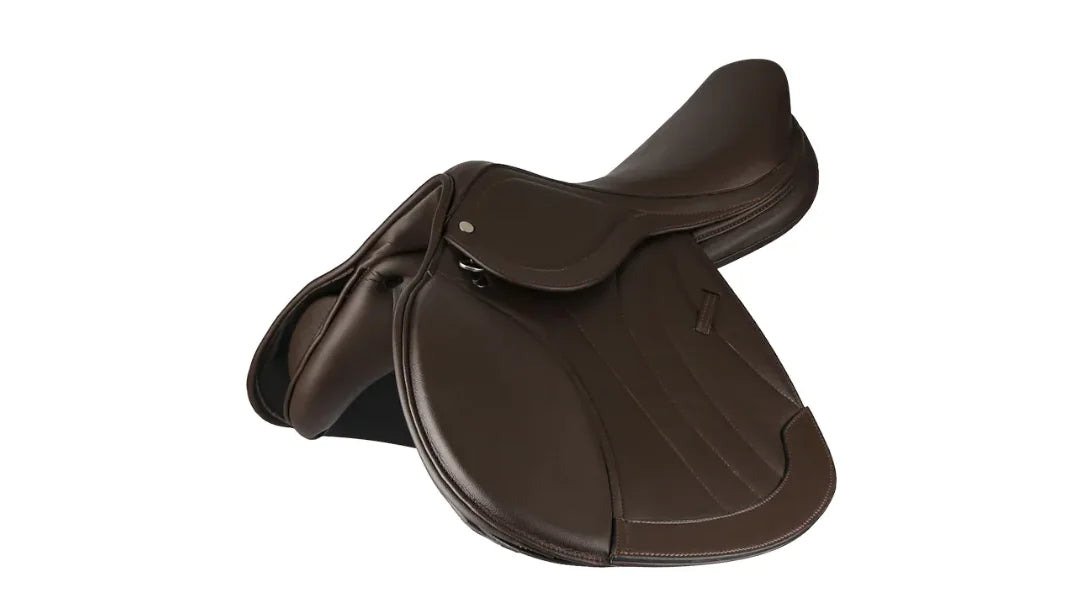
They'll ask about your horse's history, any previous lameness or behavioral issues, and what disciplines you ride. A saddle that works perfectly for dressage may create problems for jumping or trail riding because the weight distribution and balance point differ between disciplines.

Pressure Mapping and Gait Analysis
Pressure mapping technology shows exactly where the saddle applies force to the horse's back. The fitter places pressure-sensitive pads under the saddle and has you ride at various gaits while the system records contact pressure across the entire saddle surface.
This data reveals pressure hotspots that aren't visible to the eye. A saddle might look balanced but concentrate excessive pressure under one panel. Pressure mapping quantifies the problem and shows whether adjustments or a different saddle would solve it.
Gait analysis during the dynamic phase shows how the horse moves under saddle. The fitter watches for symmetry, stride length, and whether the horse moves freely or appears restricted. A horse moving with shortened stride or uneven gait may be compensating for saddle discomfort.
Recommendations and Adjustments
After assessment, the fitter provides detailed recommendations. These might include panel adjustments, flocking changes, or saddle pad modifications that improve fit without requiring a new saddle. Sometimes a simple adjustment solves the problem completely.
If a new saddle is necessary, the fitter specifies exactly what tree size, shape, and balance point will work for your horse. This guidance prevents buying another saddle that doesn't fit. The fitter may also recommend specific saddle pad options that work with your saddle and support your horse's needs.
You should receive a written report documenting the assessment findings, the horse's measurements, and the specific recommendations. This becomes your reference guide when shopping for saddles or discussing adjustments with your fitter.
Saddle Fit and Long-Term Soundness
The connection between saddle fit and long-term soundness is direct and measurable. A properly fitting saddle distributes the rider's weight across the horse's back muscles rather than concentrating it on bone, allowing the horse to move with natural biomechanics and full spinal alignment.
Over years of riding, this difference compounds. Horses ridden in well-fitting saddles maintain muscle development, move with consistent symmetry, and avoid the compensatory injuries that plague horses in ill-fitting saddles. A horse that reaches age 20 sound and athletic likely spent its career in saddles that fit properly.
Conversely, chronic saddle pressure accelerates joint wear, causes muscle atrophy, and creates movement patterns that stress joints beyond their design limits.
DIY Maintenance Between Professional Visits
You don't need a professional fitter present to monitor your saddle's condition between assessments. Regular maintenance keeps problems from developing and catches changes early.
Saddle Fit for Different Disciplines
Saddle fit requirements vary significantly between disciplines because each demands different weight distribution, balance point, and freedom of movement.
Frequently Asked Questions
What is the difference between static and dynamic saddle fitting?
Static assessment evaluates your saddle's fit while your horse stands still, checking tree shape, girth placement, and spinal clearance. Dynamic assessment watches your horse move under saddle to see how weight distributes during actual riding. Dynamic assessment reveals pressure points and biomechanical issues that static assessment alone cannot detect, making it essential for identifying problems that cause lameness or behavioral resistance.
How often should you have a professional saddle fitting assessment?
Most horses benefit from a professional fitting assessment annually, or whenever you notice signs of discomfort, behavioral changes, or performance decline. Young horses, senior horses, or those returning from injury may need more frequent evaluations. Seasonal changes in muscle development or weight can also affect saddle fit, so reassessment before major riding seasons is wise.
Can an ill-fitting saddle cause long-term behavioral issues in horses?
Yes. Saddle pressure, restricted movement, or spinal misalignment can trigger behavioral resistance, refusal, bucking, or reluctance to move forward. These behaviors often persist even after the saddle is replaced if the underlying muscle damage or soreness goes untreated. A professional fitting assessment catches fit problems early, preventing behavioral issues from developing and protecting your horse's long-term soundness.