

Table of Contents
- Why Horse Blankets Slip and What It Means
- How to Fit a Horse Blanket Correctly
- Horse Blanket Surcingles Adjustment and Placement
- Securing Horse Blanket Leg Straps Properly
- Diagnosing Slipping Direction and Fixing It
- Fillet Strings and Rear Fastening Systems
- Layering and Blanket System Setup
- When to Replace or Alter Your Blanket
- Practical Fit Assessment Checklist
- Final Thoughts on Blanket Stability
- Frequently Asked Questions
Last Updated: October 12, 2026
Why Horse Blankets Slip and What It Means
A horse blanket that slips is more than just annoying. It leaves your horse exposed to wind and cold, shifts their weight unevenly, and can cause rubbing and sores.

Blankets slip for a few main reasons. The fit might be wrong for your horse's shape. The surcingles, leg straps, or fillet strings might be loose or attached incorrectly. The blanket material itself might be slick, especially on wet days.
Owners buy quality blankets but don't adjust them properly, so the blanket migrates backward, sideways, or twists during turnout. The good news: most slipping problems are fixable with the right approach.
How to Fit a Horse Blanket Correctly
Proper fit is the foundation. A well-fitted blanket stays in place because it matches your horse's body. A poorly fitted one will slip no matter how many straps you add.
Measuring Your Horse for Blanket Sizing
Start by measuring your horse accurately. Use a soft measuring tape and measure from the center of the chest, along the shoulder, to the point of the hip. Round up to the nearest 3 inches. Most horses wear blankets between 60 and 84 inches.
Measure with your horse standing square on level ground. Don't pull the tape tight. Take the measurement twice to confirm.
Here's what to check:
- Chest: The blanket should cover the chest without gapping
- Shoulder: The front edge should sit just behind the point of shoulder
- Back: The blanket should reach the hip without bunching
- Length: The back edge should be 4 to 6 inches in front of the tail
Size charts vary by brand, so always check the specific blanket's sizing guide before buying. A 72-inch blanket from one maker might fit differently than a 72-inch from another.
Checking Shoulder and Chest Fit
The shoulder and chest area is critical. If the blanket pulls too tight here, your horse loses freedom of movement.
Place your hand between the blanket and your horse's shoulder. You should fit two fingers comfortably. This gives enough room for movement without excess fabric.
The chest should be covered fully. Look for gaps between the blanket and the chest when your horse moves.
Check the fit while your horse moves in all directions. Walk, trot, and turn. Watch for pulling, bunching, or sliding.
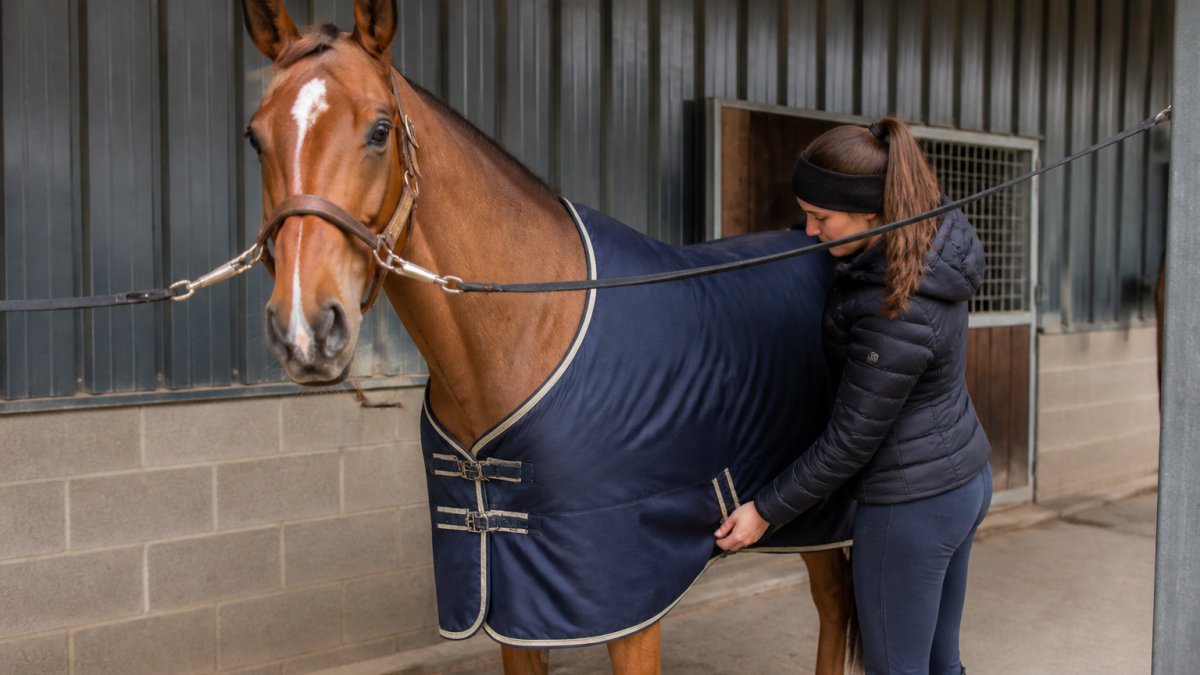
Horse Blanket Surcingles Adjustment and Placement
The surcingle (also called a belly strap or belly band) keeps the blanket from sliding backward.
A loose surcingle is the most common cause of backward slipping. Tighten it so you can fit one finger under it when your horse is standing relaxed.
Position the surcingle about 4 to 6 inches behind the elbow. Too far forward and it restricts movement. Too far back and it won't anchor the blanket properly.
Check the surcingle regularly during turnout. Blankets shift, and the surcingle can loosen. A quick tightening often solves slipping problems before they get worse.
Some blankets have two surcingles instead of one. Adjust both the same way. Both should be snug but not restrictive.
Securing Horse Blanket Leg Straps Properly
Leg straps attach at the back of the blanket and loop around your horse's hind legs. They prevent the blanket from sliding sideways or twisting.
Most blankets have either two or four leg straps. Two straps are simpler but less stable. Four straps offer better control, especially for active horses.
Crossed vs. Uncrossed Leg Straps
Crossed leg straps (also called X-straps) cross between the hind legs. One strap goes around the left leg, the other around the right leg, and they cross in the middle. This design prevents the blanket from sliding in any direction.
Uncrossed leg straps run straight down from the blanket and buckle around each hind leg separately. They're easier to put on and take off, but they don't control side-to-side movement as well.
For horses that slip blankets frequently, crossed straps are the better choice. They hold the blanket more securely.
Adjustment Tension and Safety
Leg straps should be snug but never tight. Your goal is to prevent movement, not restrict circulation or comfort.
Adjust each strap so you can slide one finger under it. This gives enough give for your horse to move naturally while keeping the blanket anchored.
Check the straps daily. They can loosen during turnout. A strap that starts snug might be hanging loose by evening.
Never leave leg straps so tight that they dig into your horse's skin. Pressure marks or rubs mean they're too tight. Loosen them immediately.
Diagnosing Slipping Direction and Fixing It
Where your blanket slips tells you what's wrong. Different slipping patterns have different fixes.
Blanket Sliding Backward or to One Side
If the blanket slides backward, the problem is usually the surcingle or fit. Tighten the surcingle first. If that doesn't work, the blanket might be too large.
If the blanket slides to one side, check the leg straps. One strap might be looser than the other. Tighten the loose one. If both are snug, the blanket might not fit your horse's shape.
Some horses have narrower hips or wider shoulders. A blanket cut for an average horse might not sit right on them.
Equestrian Leg Straps, 4-Piece Set →
Blanket Twisting or Moving Forward
Twisting usually means the leg straps are too loose or the blanket is too large. Tighten the leg straps first. If it still twists, try crossed leg straps if your blanket has uncrossed ones.
If the blanket moves forward, the issue is usually fit. The blanket might be too large, or your horse might have a shoulder shape that doesn't match the blanket. Check that the shoulder seam sits just behind the point of shoulder. If it's too far forward, the blanket will shift that direction.
Forward movement can also mean the surcingle is too loose. A loose surcingle lets the blanket slide forward instead of staying anchored.
Fillet Strings and Rear Fastening Systems
A fillet string is a rope or strap that runs along the back of the blanket, just in front of the tail.
Not all blankets have fillet strings. Some use buckles or snaps instead.
The fillet string should be taut but not rigid. Your horse should be able to move their hindquarters freely.
Check that the fillet string attachment points are secure. Loose attachments mean the string won't do its job. If the attachment is broken, you can have it repaired or replace the string.
Some blankets use a crupper (a strap that goes under the tail). This is less common but very effective for preventing forward movement.
Layering and Blanket System Setup
Layering blankets gives you flexibility for changing weather. A lightweight liner under a heavier blanket works better than a single thick blanket for many horses.
When you layer, fit the liner first. Make sure it sits correctly before adding the outer blanket. The outer blanket should fit over the liner without bunching.
Adjust all straps on both blankets. A loose strap on either layer will cause slipping. Some people tighten the outer blanket's straps more than the liner's to keep everything stable.
The American Horse Council provides guidance on blanket care and management for different seasons. Layering lets you adjust warmth without buying multiple heavy blankets.
Consider using a turnout blanket system with a removable liner.

When to Replace or Alter Your Blanket
If your blanket is old, worn, or damaged, slipping might be a sign it's time to replace it.
A blanket with ripped material can be patched. Small holes can be sewn. Broken buckles can be replaced.
If the fit is simply wrong for your horse's shape, alterations are possible.
Some horses genuinely need a custom-fitted blanket. If your horse is very large, very small, or has an unusual shape, custom blankets are worth considering.
For everyday riders managing home barns, the American Association of Equine Practitioners offers resources on horse health and equipment care.
The 1680D Turnout Blanket with Detachable Neck Cover from Horsey Horse Store offers a quality option with a 400g filling.
Practical Fit Assessment Checklist
Use this checklist every time you blanket your horse. It takes two minutes and prevents most slipping problems.
| Check | What to Look For | Fix If Needed |
|---|---|---|
| Shoulder seam position | Should sit just behind point of shoulder | Adjust blanket forward or backward |
| Chest coverage | No gaps when horse moves | Tighten surcingle or try larger size |
| Surcingle tension | One finger fits under it | Tighten or loosen buckle |
| Leg strap tension | One finger fits under each strap | Adjust each strap independently |
| Leg strap crossing | Straps cross evenly between hind legs | Reposition if one is higher than the other |
| Fillet string | Snug but not pulling | Adjust attachment or tension |
| Blanket material | No tears, holes, or separated seams | Repair or replace if damaged |
| Blanket position | Sits level on both sides | Check fit and strap adjustment |
Final Thoughts on Blanket Stability
Start with accurate measurement. Then tighten your surcingles and leg straps properly. Check them daily during turnout. Make small adjustments as needed.
If slipping continues after you've adjusted everything, the blanket might not fit your horse's shape. Consider trying a different brand or style.
At Horsey Horse Store, we stock turnout blankets and leg strap systems designed to fit most horses well. The Equestrian Leg Straps, 4-Piece Set offers a reliable replacement option if your current straps are worn or loose.

Quality equipment and proper fit make your horse comfortable and your routine easier.
Challenge: A blanket that slips leaves your horse cold, uncomfortable, and at risk of rubbing and sores. Proper fit and strap adjustment solve this problem.
Our Recommendation: Start with the right size blanket, matched to your horse's measurements. Then use the checklist above to adjust surcingles and leg straps correctly.
Frequently Asked Questions
Why does my horse's blanket keep slipping to one side?
Blankets slip to one side when the surcingle is too loose, the blanket is too large, or the shoulder fit is incorrect. If slipping occurs consistently on the right side, your horse may be rolling more on that side. Check that your surcingle sits snugly at the girth area and that your blanket size matches your horse's measurements within 2-3 inches. A properly fitted blanket should sit level across the back without gaps.
How should horse blanket surcingles be adjusted?
Surcingles should sit directly behind the front legs at the girth area and be snug enough that you cannot fit more than two fingers underneath. Adjust them so they hold the blanket firmly in place without restricting breathing or movement. If your surcingle is too tight, it can cause rubbing; too loose, and the blanket will slide. Check adjustment daily during the first week of blanket use to ensure it remains secure as your horse settles into wearing it.
Should horse blanket leg straps be crossed?
Crossed leg straps provide better stability and prevent the blanket from twisting during movement. When crossed, they form an X pattern under the tail and reduce the chance of slipping. Uncrossed straps work for calm horses in stalls but offer less security during turnout. If using crossed straps, ensure they do not rub the hind legs or tail. Tension should allow one finger of clearance to prevent chafing while keeping the blanket anchored.
How do I know if my horse's blanket is the right size?
Measure from the center of your horse's chest to the point of the buttock. A properly sized blanket should cover the back and hind legs without gaps or excess fabric hanging past the tail. Check that the shoulder sits smoothly without bunching at the neck or restricting movement. The blanket should lie flat across the back with no wrinkles. If your horse is between sizes, choose the larger option and use a belly strap to keep it in place.