

Table of Contents
- Why Deep Cleaning Matters for Hoof Health
- Horse Hoof Cleaning Tools You Actually Need
- How to Pick Out a Horse's Hoof: The Daily Routine
- How to Deep Clean Horse Hooves: Step-by-Step
- Signs of Thrush in Horse Hooves and Other Red Flags
- Horse Hoof Abscess Soaking: When and How to Do It
- Handling Difficult Horses and Common Mistakes
- Conclusion
- Frequently Asked Questions
Last Updated: October 6, 2026
Why Deep Cleaning Matters for Hoof Health
Learning how to deep clean horse hooves is one of the most useful skills you can build as an owner. Routine picking removes today's mud.
The hoof is a closed capsule. Anything trapped inside it stays there.
A daily pick takes under a minute per hoof. A deep clean takes ten to fifteen minutes for all four.
American Association of Equine Practitioners hoof care resources notes that consistent hoof hygiene supports soundness and helps owners catch issues early.
Horse Hoof Cleaning Tools You Actually Need
You need four tools for a proper clean: a hoof pick, a stiff brush, a bucket, and a towel. Everything else is optional. A basic kit costs very little and lasts for years.
Here is what to keep in your grooming tote:
- Hoof pick with a brush on one end. The pick clears packed debris; the brush sweeps the sole.
- Stiff brush for scrubbing the hoof wall and sole. A wire brush works on dried mud but never on the frog.
- Bucket for warm water and a mild cleanser.
- Clean towel or cloth for drying.
- Hoof dressing brush for applying conditioner after the hoof is fully dry.
For applying hoof dressing without the mess, the Jeffers Equine Hoof Dressing Brush with Container has a dust-proof plastic container that keeps the applicator clean between uses.

One warning: skip the hoof knife unless you know what you are doing. A knife belongs in a farrier's hands.
How to Pick Out a Horse's Hoof: The Daily Routine
Picking out a hoof takes about 30 seconds per foot. You work from heel to toe, following the groove on each side of the frog, and you finish by brushing the sole clean.
Here is the daily sequence:
- Stand beside the horse's shoulder, facing the rear.
- Run your hand down the leg and ask for the hoof.
- Support the hoof with your inside hand.
- Work the pick from heel to toe, one side of the frog at a time.
- Brush out loose dirt.
- Set the hoof down and move to the next one.
Do this before and after every ride. It takes two minutes and it is your first chance to notice a loose shoe, a crack, or a hot spot.
How to Deep Clean Horse Hooves: Step-by-Step
Deep cleaning is not a longer version of picking. It is a different job with a different goal. Routine picking removes today's debris from the sole and the grooves beside the frog.
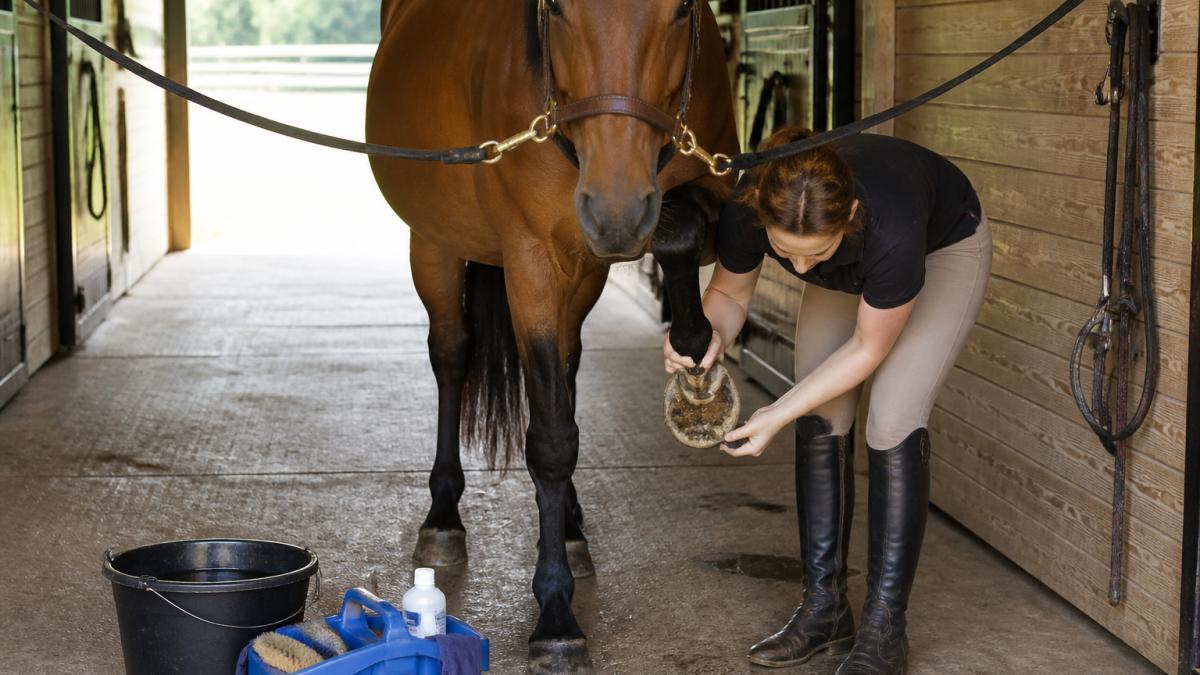
Do it once a week in normal conditions. Do it more often when the ground is wet, when the horse is stalled on shavings or manure, or when the farrier is more than six weeks out.
Step 1: Prep and Position Safely
Set yourself up before you touch a hoof. Tie the horse in cross-ties or have a helper hold it. Stand to the side, never directly in front of or behind the leg. Wear closed-toe boots.
Have your bucket, brush, and towel within reach so you are not bending and twisting mid-task. Keep your back straight and let your legs do the work.
Step 2: Clear Packed Mud, Stones, and Bedding
Start at the heel and work toward the toe. Use the pick to lift packed mud out of the grooves on either side of the frog. Angle the tip away from the frog itself.
If a stone is wedged in, work around its edges rather than prying straight down. Most pop free once the surrounding dirt is loose. Check the hoof wall and white line while you are in there.
Condition-specific notes:
- Wet mud: Rinse the sole first so you can see what you are picking. Mud hides stones and small punctures.
- Manure and wet bedding: These pack into the central sulcus and hold moisture. Clear the sulcus with the pick tip, then brush it out. Do not leave bedding packed against the frog overnight.
- Dry, caked clay or dried mud: Soak the sole briefly with a wet brush to soften it, then pick. Prying dry clay out with force can bruise the sole.
- Sand or grit: Brush rather than pick. Sand works into the white line and the pick can drive it deeper.
Step 3: Scrub, Rinse, and Dry the Hoof
Scrub the sole and wall with a stiff brush. If the hoof is caked, dip the brush in warm water with a mild cleanser and scrub again. Keep the brush off the frog if it is a wire brush, use a soft brush there instead.
Rinse, then dry the hoof completely with a towel. This step matters more than people think. Trapped moisture is what feeds thrush, so a deep clean that ends with a wet hoof has not finished the job.
Jeffers Equine Hoof Dressing Brush with Container →
Step 4: Aftercare, Dry, Then Decide
Drying is the aftercare. A clean, dry hoof does not need a dressing every time.
If the hoof is wet from washing, let it air-dry in a dry stall or on dry ground before applying anything.
Soaking is not part of a deep clean. It is a treatment step for a specific problem your veterinarian has diagnosed, and it should be done only on their instruction.
Signs of Thrush in Horse Hooves and Other Red Flags
Most of what you find in a hoof is dirt. The skill is telling dirt from a problem, and knowing who to call when it is a problem. Use the findings below as a decision guide, not a diagnosis.
What Is Normal
- Dark, crumbly material in the grooves beside the frog. That is packed debris, not infection.
- A mild, earthy smell. Manure and wet bedding smell. Infection smells different.
- A frog that is firm and slightly rubbery to the touch.
- A sole that is dry and grayish, with no soft spots.
What Needs a Farrier
Call your farrier for these. They are mechanical or shoeing issues, not medical ones:
- A loose, shifted, or missing shoe. A shoe that has moved can bruise the sole or pull hoof wall with it.
- A crack in the hoof wall that is stable, not bleeding, and not opening. Small surface cracks are common and often managed at the next trim.
- A hoof that is overdue for trimming and showing flare, long toe, or a broken hoof wall.
- A shoe that has been on longer than the farrier's recommended cycle and is starting to loosen.
What Needs a Veterinarian
Call a veterinarian for these. Do not dig, cut, or soak them yourself:
- A puncture wound in the sole, especially near the frog or the white line. A nail, wire, or sharp stone can drive bacteria deep into the foot. Do not pull it out if it is still embedded, call the vet.
- Heat in the hoof wall or a strong digital pulse felt at the back of the pastern. This can point to an abscess or laminitis.
- Swelling above the hoof or up the leg.
- Lameness that gets worse, or a horse that will not bear weight on the foot.
- A deep crack that bleeds or opens, or one that extends into the coronary band.
- A black, tarlike discharge with a sharp, rotting smell in the frog grooves, especially with a ragged or soft frog and flinching when you clean. That is thrush. Mild cases respond to cleaning and drying, but a deep or recurring case needs a vet.
- A hoof that is hot to the touch and the horse is reluctant to move.
Same-Day Calls
A puncture near the frog, a horse that will not bear weight, or a foot that is hot and swelling are same-day calls. Do not wait to see if it improves. Clean the area, keep the horse on dry ground, and call.
Horse Hoof Abscess Soaking: When and How to Do It
Soaking is for hooves that need to drain or soften, usually an abscess your veterinarian has already looked at. It is not a routine step in a deep clean.
If your vet recommends it, the standard method is simple:
- Mix warm water with Epsom salt in a shallow tub.
- Stand the horse in it for the time your vet specifies.
- Keep the horse calm and watch for signs of stress.
- Dry the hoof fully afterward.
- Wrap or poultice only if your vet tells you to.
Never soak a hoof that is actively bleeding or one with an open wound unless a vet has cleared it. And never leave a soaking horse unattended.
Handling Difficult Horses and Common Mistakes
A horse that snatches its feet is usually uncomfortable, not stubborn. Go slowly, keep sessions short, and reward every quiet moment. If a horse has never had its feet handled, start with a few seconds per hoof and build up over a week.
The mistakes we see most often:
- Digging into the sole with a hoof knife. You can thin the sole and cause bruising.
- Cleaning the frog too aggressively. The frog is living tissue. Pick around it, do not carve it.
- Skipping the drying step. Wet hooves invite thrush.
- Ignoring a bad smell. That smell is the infection, not the mud.
- Working on a horse that is dancing. Stop, reset, and try again later.
Conclusion
Wet weather, packed bedding, and long stretches between farrier visits all work against hoof health. A weekly deep clean is the cheapest defense you have.
Horsey Horse Store stocks the grooming basics that make the job quick: hoof picks, stiff brushes, and dressing applicators, plus free shipping over $25, 30-day returns on clean, unused items, and secure checkout. Start with the Jeffers hoof dressing brush and build your kit from there.
Get started with Horsey Horse Store and keep every hoof clean, dry, and sound.
Frequently Asked Questions
How often should I deep clean my horse's hooves?
Routine picking should happen daily or before every ride to clear packed mud, stones, and bedding. A full deep clean with water and a brush is usually enough once a week for horses kept in dry conditions. If your horse stands in wet bedding, mud, or manure, deep clean two to three times a week to reduce pressure buildup and lower the risk of thrush.
What are the early signs of thrush in horse hooves?
The first signs of thrush in horse hooves are a dark, black discharge around the frog grooves and a strong, foul smell. The frog may look soft, ragged, or shallow, and your horse might flinch when you press near the sulci. Catching it early means daily cleaning and keeping the hoof dry. If the frog bleeds, the horse goes lame, or the discharge spreads to the sole, call your veterinarian or farrier.
How long should I soak a horse's hoof in Epsom salt?
For horse hoof abscess soaking, most veterinarians recommend 15 to 20 minutes per session, once or twice a day, using warm water with about one cup of Epsom salt per gallon. Longer soaks soften the hoof wall and sole, which can cause more harm than good. Always dry the hoof thoroughly afterward, pack it if your vet advises, and keep the horse on clean, dry bedding between soaks.
How do I clean a horse's hoof without hurting the frog?
Use the pointed end of a hoof pick to work from heel to toe along each side of the frog, not across it. Never dig into the central sulcus or the collateral grooves with force, and skip the hoof knife unless your farrier has shown you how to use it. A stiff brush finishes the job. If your horse pulls away or flinches, stop and check for a stone, bruise, or puncture wound before continuing.