

Table of Contents
- Best Horse Grooming Tools for Shedding: Quick Comparison
- Horse Shedding Blade vs Curry Comb: Which Works Best
- How to Deshed a Horse Quickly and Effectively
- Best Grooming Routine for Spring Shedding
- Choosing the Right Tool for Your Horse's Coat Type
- Maintaining Your Grooming Tools for Durability
- Conclusion
Last Updated: August 30, 2026
Best Horse Grooming Tools for Shedding: Quick Comparison
When spring arrives and your horse's winter coat starts shedding, the right grooming tools make all the difference. At Horsey Horse Store, we understand that managing seasonal shedding maintains healthy coat texture, prevents skin irritation, and keeps your horse comfortable during the transition. The best horse grooming tools for shedding remove dead hair and undercoat efficiently while protecting sensitive skin from unnecessary pressure or irritation.

Without the right approach, you'll spend hours grooming with minimal results. With proper tools and technique, you can cut grooming time in half while improving coat health and reducing dander buildup. The right tools target loose hair specifically, work with your horse's natural shedding cycle, and reduce repetitive strain on your hands and wrists.
Quick Picks:
- Best Overall Tool: Shedding blade for speed and efficiency
- Best for Sensitive Areas: Curry comb for gentle undercoat removal
- Best Complete Solution: 10-Piece Horse Grooming Kit for full seasonal prep
- Best for Organization: ROYAL HOUSE 1216 Grooming Bag to keep tools accessible
| Tool Type | Best For | Price Range | Key Advantage |
|---|---|---|---|
| Shedding blade | Fast undercoat removal | $20-40 | Removes large amounts of dead hair quickly |
| Curry comb | Gentle grooming | $15-35 | Safe on sensitive skin, loosens undercoat |
| Grooming kit | Complete setup | $60-240 | Multiple tools for different coat areas |
| Grooming bag | Organization | $100+ | Keeps all tools accessible and portable |
Horse Shedding Blade vs Curry Comb: Which Works Best
A shedding blade uses a thin, slightly serrated metal edge to scrape away loose hair and dead undercoat efficiently. A curry comb features rounded rubber or metal teeth that loosen the undercoat and stimulate natural oil production without aggressive scraping. Think of the shedding blade as your speed tool and the curry comb as your precision tool for sensitive areas like the face, legs, and belly.
Many experienced handlers use both tools in sequence: curry comb first to loosen the undercoat, then shedding blade to remove it. A curry comb distributes natural oils across the coat, improving texture and shine during shedding (the NIH). A shedding blade removes debris faster but doesn't condition the coat the same way. For horses with sensitive skin, the curry comb's gentler action prevents irritation. For horses with dense winter coats, the shedding blade saves hours of work.
Horsey Horse Store's Horse Shedding Rake at $20.99 delivers blade efficiency in a durable design. If your horse has a particularly thick undercoat or you're managing multiple horses, a shedding blade becomes essential. For sensitive horses, a quality curry comb accomplishes the same goal with less aggressive force.
How to Deshed a Horse Quickly and Effectively
Effective deshedding follows a sequence: start with the right tool, work in the direction of hair growth, and focus on high-shedding areas first. Begin with a curry comb using circular motions to loosen the undercoat across the neck, shoulder, and barrel. Apply moderate pressure, firm enough to feel the undercoat move, but not so hard that your horse flinches.
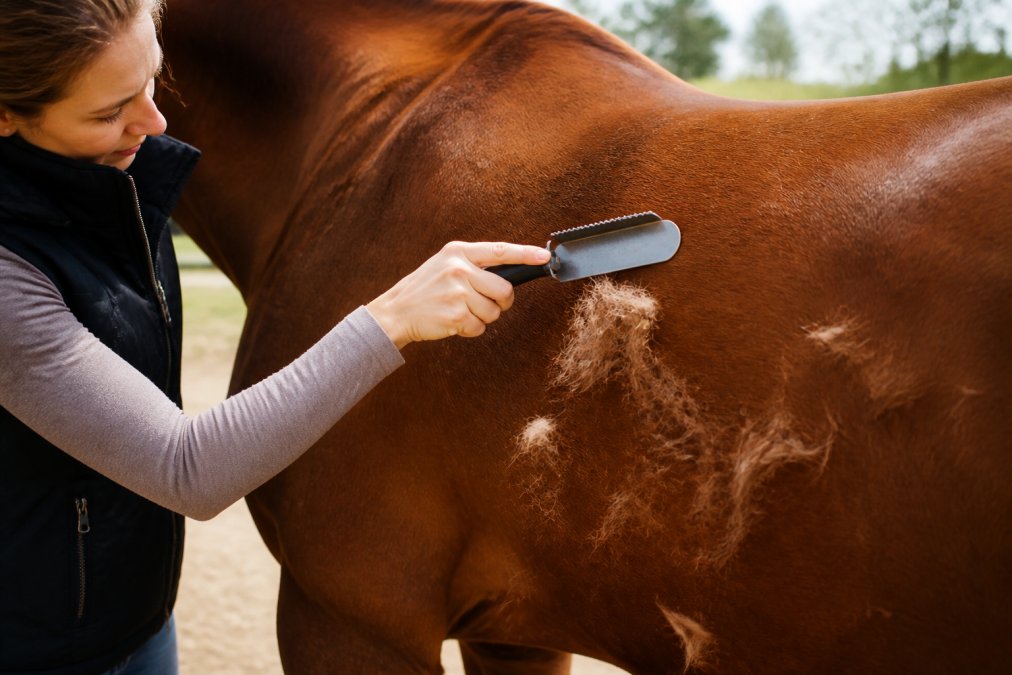
After loosening with the curry comb, switch to a shedding blade and work in long, downward strokes following hair growth. The blade's edge should skim the coat surface, scraping away dead hair without digging into skin. Most handlers cover the entire body in 20-30 minutes with a shedding blade, compared to 45-60 minutes with a curry comb alone (peer-reviewed research).
Focus on areas that shed most heavily: the neck, shoulders, barrel, and hindquarters. The face, legs, and belly require gentler tools to avoid irritation. Work in sections rather than randomly to prevent missing patches and build a rhythm that reduces hand fatigue.
A lightly damp coat releases dead hair more easily than a completely dry coat. A quick spray with a mist bottle loosens hair and reduces dust while you work, especially helpful for stubborn undercoat that resists normal grooming pressure.
Best Grooming Routine for Spring Shedding
Spring shedding management works best with a consistent routine rather than sporadic sessions. Most horses benefit from 3-4 grooming sessions per week during peak shedding season, each lasting 20-30 minutes. This frequency removes dead hair before it accumulates and reduces total grooming time compared to waiting weeks between sessions.
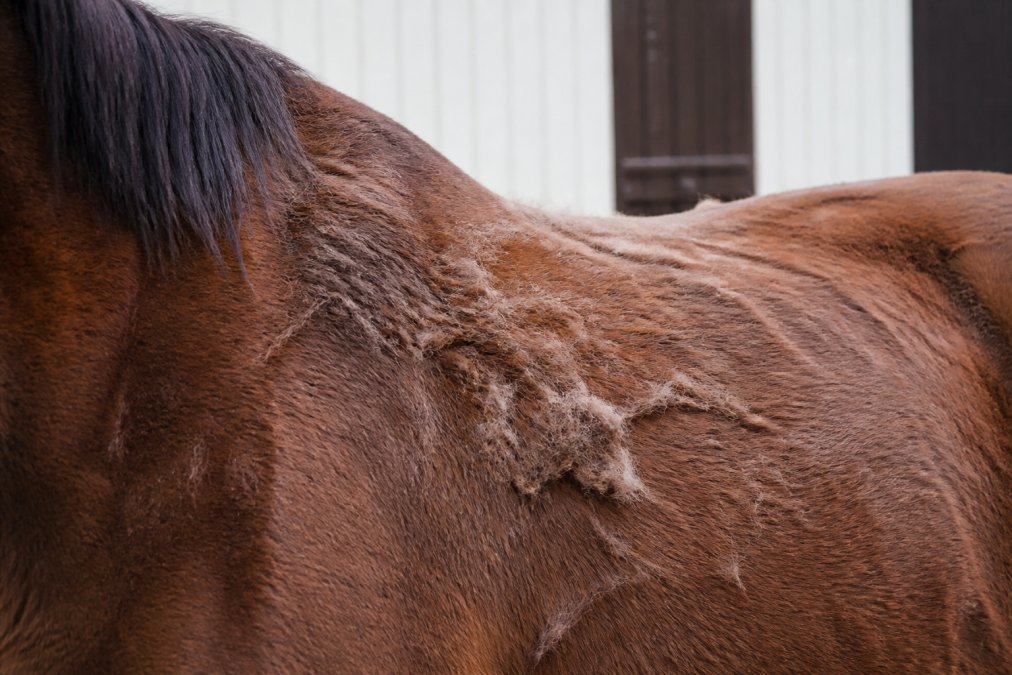
Start your routine as soon as you notice increased loose hair, typically late winter or early spring. Early intervention catches the shedding cycle before massive amounts of dead hair accumulate. Structure each session in this order: curry comb for 10-15 minutes to loosen undercoat, shedding blade for 10-15 minutes to remove loosened debris, then a soft brush to smooth the coat and remove remaining dust. This sequence works with your horse's natural shedding cycle.
Pay attention to your horse's skin health during shedding. If you notice excessive dander, scaly patches, or sensitivity to grooming pressure, reduce intensity and focus on gentler tools (the CDC). Dander buildup can indicate skin irritation from aggressive grooming or environmental factors.
Weather influences your routine. Grooming before rain or a bath helps remove dead hair before moisture locks it against the coat. Many handlers find that scheduling grooming after turnout, when the coat is slightly warm, makes dead hair release more easily.
Choosing the Right Tool for Your Horse's Coat Type
Your horse's coat type determines which tools work best. Horses with fine, thin coats need gentler tools that won't pull healthy hair or cause skin irritation. Horses with thick, dense coats can handle more aggressive grooming tools and benefit from a shedding blade's efficiency.
Fine-coated horses, often seen in Thoroughbreds and Arabians, respond well to a rubber curry comb used with gentle pressure and circular motions. A shedding blade can work on fine coats but requires a light touch. The Gracefur Sheepskin Grooming Gloves at $79.99 offer another option, providing gentle friction without a blade's sharp edge.

Thick-coated horses, draft breeds and horses with dense winter coats, shed enormous amounts of undercoat during spring. These horses benefit from aggressive grooming tools and require more frequent grooming. A shedding blade becomes essential rather than optional. The 10-Piece Horse Grooming Kit at $59.99 includes both blade and comb for different coat areas.
Curly-coated horses need specialized consideration because their coat structure traps more dead hair and dander. Standard shedding blades can damage the curl pattern, so a curry comb or soft brush works better. These horses benefit from more frequent grooming sessions with gentler tools.
Sensitive-skinned horses require gentler grooming regardless of coat thickness. If your horse shows sensitivity to grooming pressure, itching, or skin irritation, reduce blade use and rely on curry combs and soft brushes. Grooming pressure should never cause your horse to flinch.
The 8-Piece Horse Grooming Box Kit at $237.99 from Horsey Horse Store provides multiple tools for different coat types and areas. A shedding blade works on thick areas like the barrel and hindquarters, while a softer brush handles the face and legs.
Maintaining Your Grooming Tools for Durability
Grooming tools require regular cleaning to function effectively and last for years. Metal shedding blades and curry combs accumulate dead hair, dust, and sweat residue that reduces effectiveness and can transfer bacteria between horses. Cleaning tools after each grooming session takes just minutes but extends tool life significantly.
Rinse metal tools under warm water immediately after grooming to remove loose hair and sweat. Use a soft brush to clean between curry comb teeth. For shedding blades, rinse the blade edge and dry thoroughly to prevent rust. Store metal tools in a dry location. If rust spots develop, light sanding with fine-grit sandpaper restores the blade's surface.
Rubber curry combs need similar care: rinse under warm water and air dry completely before storage. Avoid leaving rubber tools in direct sunlight for extended periods, as UV exposure degrades rubber over time. Check rubber teeth regularly for cracks or deterioration.
Grooming gloves like the Gracefur Sheepskin option at $79.99 require hand washing in cool water with mild soap. Air dry completely before storage to prevent mold. Avoid machine washing or hot water, which can damage the sheepskin.
The ROYAL HOUSE 1216 Grooming Bag at $102.99 keeps tools protected and prevents damage from being tossed loose in a tack room. Organized storage means you'll actually use all your tools rather than forgetting about items buried in a corner.
Conclusion
Effective spring shedding management depends on having the right tools and using them with proper technique. The best horse grooming tools for shedding, whether a shedding blade for efficiency, a curry comb for gentleness, or a complete grooming kit for flexibility, all serve the same goal: removing dead hair while protecting your horse's coat health and skin integrity.
Horsey Horse Store offers the tools you need for every stage of shedding season. Start with the Horse Shedding Rake at $20.99 for basic efficiency, or invest in the 10-Piece Horse Grooming Kit at $59.99 for complete grooming capability. Add the ROYAL HOUSE 1216 Grooming Bag at $102.99 to keep everything organized and accessible. With proper tools, consistent routine, and attention to your horse's individual needs, you'll move through spring shedding season with less frustration and a healthier coat for your horse.

=== FAQ ANSWERS (audit these too, same rules) ===
[1] Q: What is the best deshedding tool for horses? A: The best deshedding tool depends on your horse's coat type and sensitivity. A metal shedding blade excels at removing dead hair and undercoat during heavy shedding seasons, while a rubber curry comb works well for sensitive-skinned horses and daily grooming. For comprehensive shedding management, a 10-piece grooming kit ($59.99) combines multiple tools to handle different coat areas and shedding stages effectively.
[2] Q: How often should you use a shedding tool on your horse? A: During spring and fall shedding cycles, use shedding tools 3-4 times per week to remove loose hair and dead undercoat before it sheds naturally. In off-season months, reduce frequency to once weekly as part of your regular grooming routine. More frequent use during peak shedding prevents matting, improves coat health, and reduces debris in your barn.
[3] Q: Is a shedding blade better than a brush for removing loose hair? A: Shedding blades are more effective at removing dense undercoat and dead hair than standard brushes, especially during seasonal shedding. However, brushes are gentler for sensitive areas and daily maintenance. The most efficient approach combines both: use a shedding blade for the body and thicker coat areas, then follow with a brush on the face, legs, and sensitive regions to capture remaining loose hair.
[4] Q: What grooming tools should I use for a sensitive-skinned horse? A: Horses with sensitive skin benefit from rubber curry combs and soft-bristled brushes that provide gentle stimulation without irritation. The Gracefur Sheepskin Grooming Gloves ($79.99) offer a particularly gentle option, using natural sheepskin to remove loose hair while conditioning the coat. Avoid metal shedding blades on sensitive areas; instead, use them only on the body with light pressure.
Frequently Asked Questions
What is the best deshedding tool for horses?
The best deshedding tool depends on your horse's coat type and sensitivity. A metal shedding blade excels at removing dead hair and undercoat during heavy shedding seasons, while a rubber curry comb works well for sensitive-skinned horses and daily grooming. For comprehensive shedding management, a 10-piece grooming kit ($59.99) combines multiple tools to handle different coat areas and shedding stages effectively.
How often should you use a shedding tool on your horse?
During spring and fall shedding cycles, use shedding tools 3-4 times per week to remove loose hair and dead undercoat before it sheds naturally. In off-season months, reduce frequency to once weekly as part of your regular grooming routine. More frequent use during peak shedding prevents matting, improves coat health, and reduces debris in your barn.
Is a shedding blade better than a brush for removing loose hair?
Shedding blades are more effective at removing dense undercoat and dead hair than standard brushes, especially during seasonal shedding. However, brushes are gentler for sensitive areas and daily maintenance. The most efficient approach combines both: use a shedding blade for the body and thicker coat areas, then follow with a brush on the face, legs, and sensitive regions to capture remaining loose hair.
What grooming tools should I use for a sensitive-skinned horse?
Horses with sensitive skin benefit from rubber curry combs and soft-bristled brushes that provide gentle stimulation without irritation. The Gracefur Sheepskin Grooming Gloves ($79.99) offer a particularly gentle option, using natural sheepskin to remove loose hair while conditioning the coat. Avoid metal shedding blades on sensitive areas; instead, use them only on the body with light pressure.
Managing seasonal shedding doesn't have to drain your time or stress your hands. Horsey Horse Store's curated grooming collection, from individual shedding rakes to complete grooming kits, simplifies your daily barn routine and supports your horse's coat health. Shop our grooming tools today with free shipping over $25 and a 30-day return guarantee, so you can groom with confidence knowing you have reliable gear backed by our commitment to your satisfaction.
This article was written using GrandRanker