

Table of Contents
- Quick Comparison Table: Affordable Riding Helmets
- How to Fit a Horse Riding Helmet Correctly
- ASTM/SEI Certified Riding Helmets: What the Standards Mean
- When to Replace a Riding Helmet: Safety and Timeline
- TuffRider Starter Riding Helmet: Maximum Value at $49.99
- Mid-Range Options: Troxel Sport 2.0 and OutdoorMaster
- Schooling vs. Show Helmets: What You Actually Need
- Frequently Asked Questions
Last Updated: September 25, 2026

Quick Comparison Table: Affordable Riding Helmets
| Helmet | Price | Best For | Key Feature |
|---|---|---|---|
| TuffRider Starter | $49.99 | Budget-conscious beginners | Maximum value entry point |
| OutdoorMaster with Sun Visor | $69.99 | Trail and outdoor schooling | Built-in sun protection |
| Troxel Sport 2.0 | $75.99 | Everyday schooling | Reliable mid-range option |
| Equestrian Helmet and Gloves Set | $99.99 | New riders needing gear | Complete starter package |
| Troxel Spirit | $118.99 | Style-conscious riders | Fashion-forward designs |
| Ovation Metallic Schooler | $147.99 | Serious schooling riders | Lightweight construction |
When shopping for affordable horse riding helmets for schooling, prioritize ASTM/SEI certification over price. Horsey Horse Store offers options from $49.99 to $147.99, each meeting safety standards while addressing different budgets and riding needs.

How to Fit a Horse Riding Helmet Correctly
A properly fitted helmet is non-negotiable. It should sit level on your head with the front edge two fingers above your eyebrows, covering the base of your skull without tilting forward or backward.
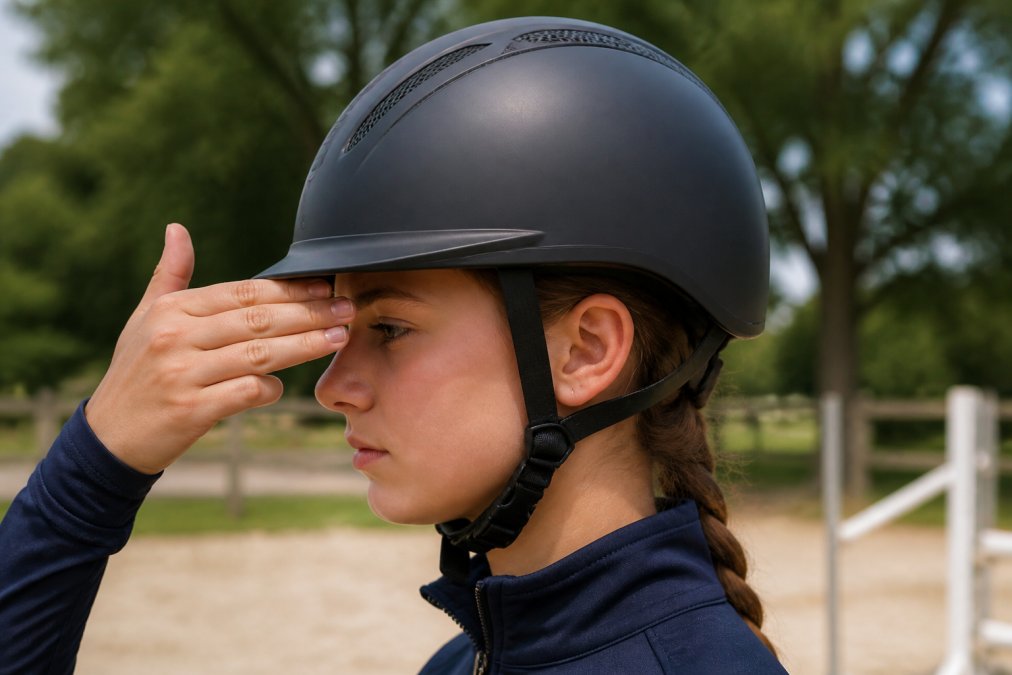
Measure Your Head Circumference
Start by measuring your head circumference at the widest point, typically just above your ears. Most helmets come in small, medium, large, and extra-large sizes, though some brands use centimeter measurements. Write down your measurement before ordering, this is the single most important step when buying online.
Understand Your Head Shape: Oval vs. Round
Head shape compatibility is the #1 reason riders return helmets purchased online. Helmets are engineered for either oval or round head shapes, and buying the wrong shape causes pressure points and poor fit.
Oval head shape: If your head is longer front-to-back than side-to-side, you have an oval head. Most riders fall into this category.
Round head shape: If your head is nearly equal in width and length, you have a round head.
To determine your head shape: Measure front-to-back (forehead to back of skull) and side-to-side (temple to temple). If front-to-back is longer, you're oval; if nearly equal, you're round.
Use this information to avoid poor fits.
Secure the Chin Strap Correctly
The chin strap should be snug enough that you can fit only one finger between the strap and your chin. If it's loose, the helmet won't stay in place during a fall. If it's too tight, it'll be uncomfortable for long rides and you'll be tempted to loosen it, defeating the purpose.
Test the Fit Through Movement
Check the fit by tilting your head forward, backward, and side to side. The helmet should move with your head, not slide independently. Horsey Horse Store offers 30-day returns, so ordering two sizes to compare fit at home is practical.
ASTM/SEI Certified Riding Helmets: What the Standards Mean
ASTM/SEI certification is the baseline for riding helmet safety in the United States. The label means the helmet has been tested for impact absorption, shell durability, and retention system security.
The certification process involves dropping helmets from specific heights onto different surfaces to measure impact force. Helmets must reduce force below a threshold and keep the chin strap secure, simulating real fall scenarios.
Every helmet in our lineup meets ASTM/SEI standards. What differs across price points is materials, ventilation, weight, and design features, not fundamental safety protection.
When to Replace a Riding Helmet: Safety and Timeline
Replace a helmet after any significant impact. Foam liners compress on impact and lose protective capacity. The rule is simple: one crash, one new helmet.
The One-Crash Rule: Why It Matters
Foam absorbs impact by compressing and cannot return to original density. A helmet that's absorbed one fall has reduced protective capacity. The ASTM/SEI standards assume one significant impact; after that, structural integrity is compromised even if the shell looks intact.
A significant impact is any fall where your head hits the ground, a jump standard, or wall hard enough that you felt it. Minor bumps don't require replacement.
Crash Replacement Policies: What You Need to Know
Most helmet manufacturers offer crash replacement programs:
Standard crash replacement: Send your damaged helmet with proof of purchase. The manufacturer inspects it and offers a discounted replacement, typically 30-50% off retail price.
Timeline: Expect 2-3 weeks for processing. This is why serious riders keep a backup helmet on hand.
Documentation: Photograph exterior damage, interior foam compression, and the serial number. This speeds up the claim process.
Check your specific helmet: Verify the crash replacement policy before purchasing.
TuffRider Starter Riding Helmet →
Insurance and Helmet Replacement
At $49.99-$75.99, affordable helmet replacement is manageable, making you more likely to replace it immediately after a crash rather than ride in a compromised helmet.
Timeline Without a Crash: Age-Based Replacement
Without a crash, replace schooling helmets every 3-5 years depending on riding frequency. Foam degrades from sweat, UV exposure, and wear.
Check regularly for visible cracks, loose padding, or a chin strap that won't stay tight. If interior foam is compressed or flaking, replacement is overdue.
Planning for Replacement: The Backup Helmet Strategy
Serious riders keep a backup helmet for immediate protection after a crash or during servicing. With options starting at $49.99, this is financially realistic.
Horsey Horse Store makes replacement simple with 30-day returns and affordable options across price points. When you're ready to replace, you already know your head shape, your size, and your preferred features, ordering a replacement is faster than your first purchase.
TuffRider Starter Riding Helmet: Maximum Value at $49.99
The TuffRider Starter is the entry point that doesn't compromise on safety. At $49.99, it's the most affordable ASTM/SEI certified helmet in our lineup, making it ideal for new riders, budget-conscious families with multiple riders, or anyone who needs a backup schooling helmet.
What works: You get ASTM/SEI certification at a price that makes replacing a helmet after a crash financially manageable. The fit is straightforward. It's available in black with a large size option, keeping the design simple and functional.
What doesn't: The TuffRider Starter is basic by design. If you're looking for advanced ventilation ports, lightweight construction, or premium padding, this isn't it.
Best for: New riders testing whether they'll stick with the sport, families outfitting multiple riders on a budget, and anyone who needs a reliable backup helmet without spending $150+.
Mid-Range Options: Troxel Sport 2.0 and OutdoorMaster
The Troxel Sport 2.0 at $75.99 and OutdoorMaster Equestrian Helmet with Sun Visor at $69.99 occupy the sweet spot where safety meets practical features without the premium price tag.
The Troxel Sport 2.0 is a reliable, no-frills helmet that delivers on the basics. It's ASTM/SEI certified and designed for everyday schooling.
The OutdoorMaster stands out for one specific feature: the built-in sun visor. The helmet is available in matte blue and includes excellent ventilation. At $69.99, you're paying slightly more but getting measurable comfort improvements.
What separates these two: Troxel Sport 2.0 is the straightforward choice for covered arena schooling. OutdoorMaster is the choice if you're riding outdoors regularly and want better ventilation and sun protection built in.
Both are ASTM/SEI certified.
Schooling vs. Show Helmets: What You Actually Need
The difference between a schooling helmet and a show helmet is aesthetic, not protective. Both are ASTM/SEI certified. Both protect your head equally in a fall. The difference is appearance.
Show helmets typically feature a velvet cover, a polished shell, and specific color options that match formal riding attire.
The real insight most riders miss: your schooling helmet doesn't need to match your show helmet. Buy the schooling helmet that fits best and feels most comfortable. Your horse doesn't care what color it is, and neither should you when you're focused on riding well.
Frequently Asked Questions
What safety certifications should I look for in a schooling helmet?
Look for ASTM F1163 or SEI certification marks on any affordable riding helmet. These standards verify the helmet has passed impact absorption and retention tests required for safe schooling use. Both certifications meet the same safety requirements, the difference is the testing organization. Check the helmet's interior label or product description to confirm certification before purchase.
How do I ensure my schooling helmet fits correctly?
Measure your head circumference at the widest point above your ears and eyebrows. The helmet should sit level on your head, two fingers above your eyebrows. The chin strap must be snug enough that you can fit only one finger under it when fastened. A proper fit prevents the helmet from shifting during a fall and ensures maximum protection. Try the helmet on before riding or use the 30-day return policy if it doesn't fit.
How often should you replace a horse riding helmet?
Replace your helmet every 3-5 years, even if it appears undamaged, because foam degrades over time and loses impact protection. Replace it immediately after any fall or impact, even if there's no visible damage, internal foam compression may not be visible. Store your helmet in a cool, dry place away from direct sunlight to extend its lifespan. Check the manufacturer's guidelines on your specific helmet model.
Are affordable riding helmets safe for daily schooling use?
Yes, affordable helmets certified to ASTM/SEI standards offer the same impact protection as expensive options. The price difference usually reflects brand name, advanced features like MIPS technology, or premium materials, not basic safety. Budget helmets like the TuffRider Starter at $49.99 meet all required safety standards for everyday schooling. What matters most is proper fit and timely replacement after impact.